

Healthy-looking hair does not always require an expensive collection of products or a complicated routine. A few consistent habits can help your hair feel softer, look shinier, and stay easier to manage.
The best hair care routine depends on your hair type, scalp needs, styling habits, and how often you wash your hair. Instead of constantly changing products, focus on gentle cleansing, conditioning, reducing unnecessary heat, and protecting your hair from daily friction.
These 10 simple hair care routine steps can help you build an easy routine for healthy, shiny, and strong-looking hair.
Also read more: Easy Makeup Ideas
1. Start With a Clean and Balanced Scalp
A healthy hair routine begins with the scalp. Oil, sweat, styling products, and everyday buildup can accumulate around the roots, so regular cleansing is important.
Choose a shampoo that suits your hair and scalp type. If your scalp becomes oily quickly, you may need to wash more frequently, while people with drier hair may prefer longer gaps between washes.
Focus shampoo mainly on the scalp rather than aggressively rubbing the lengths of your hair. When you rinse, the shampoo naturally moves through the rest of the hair.
Avoid using extremely hot water because it can leave both the scalp and hair feeling dry.

2. Use a Hair Scalp Massager Gently
A Hair Scalp Massager can make shampooing feel more relaxing and help distribute cleanser across the scalp.
Apply shampoo first, then use the massager with gentle circular movements. There is no need to press hard or scratch the scalp.
The goal is simply to help loosen buildup while creating a relaxing scalp-care experience.
A Hair Scalp Massager can be especially useful if you enjoy turning your regular wash day into a more complete self-care routine.
Always use it gently and stop if your scalp feels uncomfortable or irritated.

3. Condition the Mid-Lengths and Ends
Conditioner helps hair feel softer, smoother, and easier to detangle after shampooing.
Apply most of the product to the mid-lengths and ends, where hair often experiences more dryness and friction. Unless your conditioner is specifically designed for scalp use, you usually do not need to apply a heavy amount directly to the roots.
Allow the conditioner to sit for the amount of time recommended on the product before rinsing.
If your hair is particularly dry, curly, or textured, a richer conditioner may feel better than a very lightweight formula.

4. Detangle Hair Carefully
Wet hair can be more vulnerable to stretching and breakage, so detangling should be gentle.
Start at the ends and gradually work upward rather than pulling a brush directly from the roots to the tips.
A wide-tooth comb or a detangling brush can make this step easier, particularly for longer or textured hair.
If your hair tangles easily, a leave-in conditioner or detangling product may provide extra slip.
Take your time. Gentle detangling can help reduce unnecessary pulling and make the rest of your styling routine easier.

5. Dry Your Hair Without Rough Rubbing
How you dry your hair can affect how smooth it looks and feels.
Instead of aggressively rubbing wet hair with a towel, gently squeeze out excess water.
A soft microfiber towel or smooth cotton T-shirt can be useful if you want to reduce friction.
Avoid twisting the hair extremely tightly inside a towel. Letting it partially air dry before styling can also reduce the amount of heat needed later.
Small changes in your drying routine can make everyday hair care feel much gentler.

6. Protect Your Hair Before Heat Styling
Hair dryers, straighteners, and curling tools can be convenient, but frequent high heat can leave hair feeling dry or damaged.
Before using heated tools, apply a heat-protectant product according to its directions.
Whenever possible, use the lowest effective temperature rather than automatically choosing the highest setting.
You can also reduce heat exposure by allowing hair to partially air dry before blow-drying.
If you style your hair frequently, try alternating between heat-styled days and simpler heat-free hairstyles.

7. Add Moisture With a Hair Mask
A hair mask can be a useful occasional addition to your regular conditioner.
Masks are often richer and can help dry or rough-feeling hair feel softer and more manageable.
Depending on your hair type and product, you might use a hair mask once a week or occasionally when your hair feels especially dry.
Apply it mainly through the mid-lengths and ends and follow the recommended application time.
Using more product or leaving a mask on much longer than instructed does not necessarily create better results.

8. Use Hair Oil on the Ends When Needed
A small amount of hair oil or smoothing serum can help the ends look shinier and feel softer.
Start with only one or two drops, particularly if your hair is fine. Rub the product between your palms before gently smoothing it over the ends.
Avoid applying too much oil near the roots unless the product is specifically designed for scalp use.
Hair oils can be especially helpful after styling when you want to soften the appearance of dry ends or flyaways.
The key is using a small amount rather than making the hair feel heavy.

9. Protect Your Hair at Night With a Silk Hair Bonnet
Nighttime friction can leave long, curly, textured, or styled hair looking tangled by morning.
A Silk Hair Bonnet can help keep hair contained while you sleep and reduce rubbing against rougher bedding.
Gather your hair gently before putting the bonnet on. Avoid pulling the hair extremely tightly, especially around the hairline.
You can also pair a Silk Hair Bonnet with a smooth pillowcase if you enjoy a more complete nighttime hair-care setup.
Make sure your bonnet is cleaned regularly according to its care instructions.

10. Stay Consistent With a Simple Hair Care Routine
The final step is consistency.
You do not need to use every hair product available to create a good routine. A simple schedule is often easier to follow and helps you understand what your hair actually responds well to.
A basic routine might include:
Shampoo → Conditioner → Gentle Detangling → Leave-In Product → Heat Protection When Needed
Then add a hair mask, oil, scalp-care tool, or nighttime protection only when it suits your hair.
Pay attention to how your hair and scalp feel. If a product repeatedly causes irritation, excessive dryness, or buildup, consider reducing or discontinuing its use.
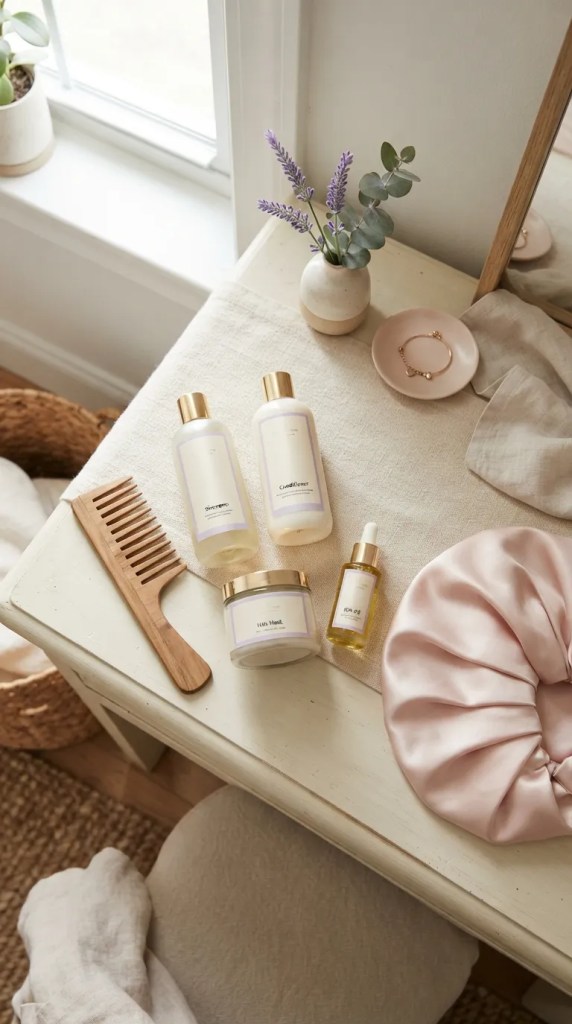
Simple Weekly Hair Care Routine
You do not need to complete every hair-care step every day.
A practical weekly routine could look like this:
Wash Day: Shampoo → Conditioner → Detangle → Leave-In Product
Styling Days: Heat Protectant → Styling → Small Amount of Hair Oil
Treatment Day: Hair Mask or Extra Conditioning
Night Routine: Gentle Detangling → Loose Hairstyle → Silk Hair Bonnet
Adjust the frequency depending on your hair type and lifestyle.
Tips for Keeping Hair Looking Healthy and Shiny
Avoid brushing or pulling aggressively when your hair is tangled.
Keep styling tools clean and reduce unnecessary high heat.
Use conditioner regularly if your hair tends to feel dry.
Trim damaged-looking ends when needed.
Avoid extremely tight hairstyles every day, especially if they place repeated tension around the hairline.
Choose products based on how your hair responds rather than simply following every hair trend you see online.
Frequently Asked Questions
| How often should I wash my hair? | There is no single schedule that works for everyone. Washing frequency depends on your scalp, hair type, styling habits, and lifestyle. |
| Is hair oil necessary? | No. Hair oil is optional, but a small amount can help dry ends feel softer and look smoother. |
| Can I use a scalp massager every time I shampoo? | You can use one if it feels comfortable, but keep the pressure gentle and avoid using it on an irritated or sensitive scalp. |
| Is a Silk Hair Bonnet useful for all hair types? | Different hair types may benefit differently, but many people use smooth bonnets to reduce nighttime friction and keep hair more contained while sleeping. |
| Should I use conditioner every time I shampoo? | Many people benefit from conditioning after shampooing, especially on the mid-lengths and ends. Adjust based on your hair type and product. |
| How can I make my hair look shinier? | Gentle conditioning, reduced heat damage, smoothing products, careful detangling, and consistent hair care can all help improve the appearance of shine. |
Final Thoughts on a Simple Hair Care Routine
A simple hair care routine for healthy, shiny, and strong-looking hair does not have to involve dozens of products. Gentle cleansing, regular conditioning, careful detangling, heat protection, and nighttime care can create a strong foundation for your routine.
Tools such as a Hair Scalp Massager can make wash day more enjoyable, while a Silk Hair Bonnet can become a simple part of your nighttime routine.
The most important thing is consistency. Choose products and techniques that work well for your own hair instead of changing your routine every time a new trend appears.